Showing posts with label In the news. Show all posts

14 January 2015

No laughing matter...

It is difficult to be clear-headed and express one's opinion about what happened in Paris last week... This is because so many complex, overlapping and emotive issues are involved, such as (in no particular order):
  • freedom 
  • freedom of expression
  • press freedom
  • the role and responsabilities of journalists
  • political satire
  • humour
  • political cartoons and their impact
  • anarchy and left-wing politics
  • terrorism
  • islamism
  • totalitarian regimes and theocracies
  • religious/social/ethnic intolerance
  • the marginalization of Muslim communities in France
  • secularism and French "laïcité" laws
  • anti-defamation laws
  • the rise of the extreme-right
  • multiculturalism
  • racism and poverty
  • social and spatial divide in urban areas
  • anti-semitism
  • blasphemy
  • iconoclasm
  • protest and solidarity marches
  • groupthink
  • etc.

Here are a few links to help you try and understand more clearly the issues involved:

Wikipedia entries:

> Charlie Hebdo shooting
> Islam
> Islamism
> Islam in France
> Depictions of Muhammad
> List of freedom indices
> Iconoclasm
> Groupthink
> Toleration
> Laïcité (in English)

Opinion:

> Islam and free speech: What's so funny? Aljazeera article
> International: des voix discordantes sur les caricatures de Charlie Hebdo. Contrepoints
> Caricatures de Charlie Hebdo : Peut-on rire de tout? Contrepoints
> Je ne suis pas Charlie... The Guardian
> Charlie Hebdo tributes. THE DAY
> Protests and demonstrations. THE DAY
> A The Guardian journalist's opinion on French laïcité
> The Pope's view. AP
> "France must reach out to disillusioned young Muslims...". The Guardian
> Video from The Guardian: interviews of members of the British Muslim community.
> What are the issues around the Charlie Hebdo shootings? THE DAY

Other sources:

> Statement by the High Commissioner (UN) for human rights
> World Press Freedom Index 2014

Please send as "comment" suggestions for other sources!

11 December 2014

There are hungry people in wealthy countries too...


Text adapted from an article in THE DAY:

Around 13 million Britons live below the poverty line, and the situation is getting worse.

A damning new government report shows that rising food prices and stagnating wages have led to a huge surge in the use of food banks.

Over 350,000 people relied on the 420-plus food banks in Britain in 2012-13; this is almost triple the number for 2011-12.

Food banks receive public and corporate food donations, which is then distributed to those in need. They have become a lifeline for those who, with electricity bills and rent to pay, are at risk of going hungry.

The report's authors say their “anger knows no bounds” towards Britain’s supermarkets, which throw away thousands of tonnes of unsold edible food every day.

A charity called FareShare provides one million meals a month from saved food, but this is just two percent of all the food that is wasted.

The government says it will take action to help Britain’s beleaguered food banks and to address the supermarkets’ throwaway culture.

Should we feel that concerned though for the poor in wealthy countries? After all, while the deprivation on our doorsteps might tug at our heartstrings, our real focus should surely be on the 842 million people around the world who live in extreme hunger and face a genuine struggle to survive…

Some argue, however, that the world’s hunger problems are overwhelming, unsolvable, or not our concern. After all, charity should start at home; we can at least help ease the suffering of those around us, who may well be people we know and, at some point, even ourselves…

Questions/to do:
  1. What, according to the article, are the causes of hunger in the UK?
  2. What is the population of the UK?
  3. How wealthy is the UK?
  4. Is the percentage of poor people in the UK higher than in France?
  5. Are there food banks in France?
  6. Would you be a volunteer for a charity like FareShare?
  7. List some of the charities that try to solve the problem of hunger in the world.
  8. Prepare a 60-second talk arguing that “charity starts at home”.

11 October 2014

Young people CAN make the world a better place!

Malala Yousafzay
Malala accepting her NOBEL PEACE PRIZE
A WORLD AT SCHOOL
Malala's speech to the United Nations General Assembly 2013
TED talks on the importance of educating girls

Article by Arthur, Pierre and Paul from the Ensemble Scolaire International Massillon in Clermont-Ferrand (France):

Malala Yousafzai and Kailash Satyarthi won the Nobel Peace Prize on Friday 10th October 2014.

Malala Yousafzai is a Pakistani teenager who defied the Taliban to promote the education of girls, and Kailash Satyarthi is an Indian children’s rights activist.

They won for their “struggle against the oppression of children and young people and for the right of all children to education”. In its citation, the Nobel Committee noted it was “an important point for a Hindu and a Muslim, an Indian and a Pakistani, to join in a common struggle for education and against extremism”.

Malala Yousafzai, now 17, was shot in the head by a Taliban gunman two years ago. She only just survived the attack and has continued to campaign vociferously for girls’ education. She is the youngest Nobel laureate in history.

Speaking at a news conference in Birmingham, where she is now based, the teen said she was honoured to be the youngest person and the first Pakistani to ever receive the prestigious prize: "The award is for all the children who are voiceless, whose voices need to be heard," she said.

Born in the picturesque Swat Valley in northwestern Pakistan, Malala first gained attention in 2009, when she was just 12, after she wrote a diary about life in her native Swat as it fell under Taliban influence. Her sagacious insights into the importance of education and her determination to buck the Taliban clampdown on girls’ education caught the attention of the BBC, which published her diary.

Three years later, the Pashtun student made international headlines when she was shot in the head at close range in her school bus by a Taliban militant.

She survived the attack, enduring a life-saving operation in Pakistan before being airlifted to Britain for further treatment and extensive rehabilitation.

Barely nine months after her traumatic, near-death experience, the outspoken Pakistani girl riveted audiences across the world when she gave a speech to the United Nations on her 16th birthday, a day the United Nations celebrated as “Malala Day”.

Responding to the news of the award on Friday, Pakistani Prime Minister Nawaz Sharif congratulated the schoolgirl and called her “the pride” of his country.

Satyarthi, founder of the NGO Bachpan Bachao Andolan (“Save the Childhood Movement”) has maintained the teachings of Mahatma Gandhi and headed various forms of peaceful protests, “focusing on the grave exploitation of children for financial gain,'' the Nobel committee said.

Unlike the Pakistani teen, Satyarthi was relatively unknown on the international stage before Friday’s Nobel Peace Prize announcement.

Satyarthi is known in his native India for his work in helping tens of thousands of children, forced into slavery by businessmen, landowners and others, to gain their freedom.

Reacting to the news on Friday, Kailash thanked the Nobel committee for "recognising the plight of millions of children who are suffering in this modern age”.

Satyarthi said in an interview on an Indian TV station: "Something which was born in India has gone global and now we have a global movement against child labour. After receiving this award, I feel that the people will give more attention to the cause of the children in the world."

17 September 2014

Teenagers decide their (country's) future?


Questions:
  1. According to opinion polls, how will young people vote at the referendum on Scottish independence?
  2. Do you think it is a good thing that youth are allowed to take part in the independence referendum?
  3. Would YOU choose YES or NO at the Thursday 18 September referendum?

11 September 2014

9/11


To do:
  1. Describe in detail the photo above (the man and his surroundings as well as the tattoo) and give it a title.
  2. Describe your feelings when looking at this picture (would the feelings of an American be the same as yours do you think?).
  3. List questions you would like to put to the photographer about the photo he has taken.
  4. Imagine the internal monologue of the tattooed man in the situation above.
  5. Ask someone who remembers 9/11 where they were, with whom, and what they were doing at the time they heard the news of the terrorist attacks on NYC and Washington.
  6. Send a short "comment" to this blog post stating what you think of the 9/11 MEMORIAL.

3 September 2014

Who, regarding Ukraine, has accused the West of being "weak" and "decadent" ?


Questions/to do:
  1. Describe the painting and give it a possible title.
  2. What was the artist’s purpose in painting this work do you think?
  3. How does it illustrate the title of this post?
  4. Where is Ukraine (list its neighbors)?
  5. When did the political crisis in Ukraine start and why?
  6. What is “the West”?
  7. Define “weak” and “decadent”.
  8. What is John McCaine’s job?
  9. Is he Democrat or Republican?
  10. How influential is John McCaine?
  11. Define what “Putin’s Orwellian universe” means, as mentioned by McCaine on his website.
  12. What does McCaine feel should be done about Ukraine?
  13. Could McCaine have accused the West of being “weak” and “decadent”?
  14. What is NATO?
  15. Who is the Secretary General of NATO and what does he do?
  16. Could the Secretary General of NATO have accused the West of being “weak” and “decadent”?
  17. According to his personal website, what kind of person is Vladimir Putin?
  18. Could Putin have accused the West of being “weak” and “decadent”?
  19. Who did accuse the West of being “weak” and “decadent”?
  20. Do you share the Ukrainian ambassador’s opinion on the West’s attitude to events in his country?
DO NOT FORGET TO LIST & LEARN:

> NEW WORDS & PHRASES!

> FACTS & FIGURES!

14 April 2014

Voter apathy is on the increase... Who cares?!


Sadiq Khan, the UK shadow justice secretary, says lowering the voting age to 16 is at the heart of the Labour party's plans for constitutional reform.

He argues that lowering the voting age is a crucial way of tackling the public's malaise towards all things political: “Getting the public into the habit of voting is clearly a key part of any solution if we are to raise the numbers of those who participate in elections. We need to get people hooked on voting at an early age because the evidence shows if you vote when you first become eligible you're more likely to keep on voting for the rest of your life. Don't vote when you're young and you're more likely to never vote...”

A left-leaning think tank has even suggested that voting should actually be made compulsory for first-timers. Labour also wants improved citizenship education in schools. 

Khan says that political parties have to make much more effort if they want to re-connect with the public and demonstrate they are relevant to the issues which affect people's lives on a day-to-day basis.

Khan thinks that the millions of ordinary people who are involved in campaign groups and charities put political parties to shame; translating their community engagement into support for party politics is a challenge for those in Westminster, Cardiff, Edinburgh and Belfast...

A survey shows that nearly half of Britons are disgruntled with politics. Among the voters aged 18 to 24, “ennui” rivals “fury” as the dominant feeling about politics.

When Harold Wilson won the 1964 general election, more than three quarters of people cast their vote across the generations. At the 2010 elections, 76% of over-65s voted, while only 46% aged 18-24 went to the ballot box.

According to a recent poll, apparently only one in ten people aged 18 to 24 were definitely planning to vote at the next general elections...


Questions:
  1. What do the words and expressions in bold mean?
  2. Who is Sadiq Khan?
  3. What is the Labour party?
  4. Why does Mr Khan want the voting age to be lowered to 16?
  5. Should voting be compulsory do you think?
  6. What advice would you give Mr Khan (other than lowering the voting age) to get his political party to "re-connect with the public" ?
  7. How do you serve your community? 
  8. Why does Mr Khan mention Westminster, Cardiff, Edinburgh and Belfast?
  9. Would you say you were more bored than angry about politics and politicians?
  10. Will you (or would you if you were allowed to) vote in the next general elections in your own country?
Assignment:

12 April 2014

Tutu hot?!

Questions:
  1. Why is the Intergovernmental Panel on Climate Change against fossil fuels and what does it recommend?
  2. Is Germany locked into using coal?
  3. Why is moving away from using fossil fuels so urgent?
  4. How expensive is renewable energy?
  5. Who is Desmond Tutu?
  6. What are his achievements?
  7. Do you agree with his opinions on global warming and how to solve it?
Assignment:
Read out the TV news bulletin for April 1st 2030; include descriptions of how energy production and use affects society and the environment...

25 January 2014

Some are born great, some achieve greatness, and some have greatness thrust upon 'em...


Questions:
  1. Why are Gates, Klitschko and Bieber in the news (end of January 2014)?
  2. Why, according to you, are these people great?
  3. What will they be doing in ten years' time do you think?

Assignement:

Working with two classmates, imagine Gates, Klitschko and Bieber in a plane together; the plane is going to crash, but there are only two parachutes... Who do you think should have the parachutes and why?!

The three people in your group will each play one of the characters (Gates, Klitschko or Bieber), and will each, in turn, plead to the rest of the class for his right to have one of the two parachutes... The class will decide who will have the parachutes!

11 January 2014

On the 19th of January 2014, the Catholic Church organizes its 100th World Day of Migrants and Refugees


Catholic Culture website

Questions on the video:
  1. How old is Hanadi?
  2. Where does she come from?
  3. Where is she living?
  4. Why has she left Syria?
  5. How many people live in the refugee camp?
  6. Is Hanadi happy to go to school?
  7. How many friends does she have?
  8. Why have youth centers been set up?
  9. What does Hanadi miss most about Syria?
  10. What is she hoping for?
  11. How many Syrian refugees are there in Jordan?
  12. What percentage of the refugees are under 18?

Assignement:
  1. Research the plight of Syrian refugees (why are they refugees, how many of them are there, where are they living, what are their living conditions, what is being done for them by the international community?).
  2. Summarise and comment the Pope's message.
  3. Research what the Catholic Church in France is doing to help migrants.

1 January 2014

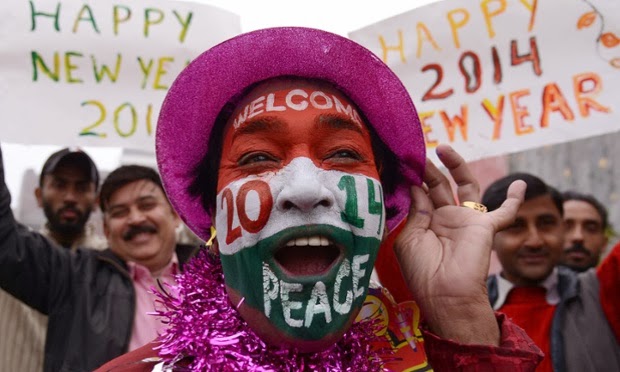
HAPPY NEW YEAR!


Questions on the above photo:
  1. When was this photo taken?
  2. Where was it taken?
  3. Who is the man welcoming?
  4. Why is "PEACE" written on his chin?
  5. Why do people celebrate New Year's?
  6. Was 2013 a "good" or a "bad" year for the world?
  7. What would be a good title for this photo?

What are your New Year's resolutions?!

Here are some popular ones:
  • Lose weight/eat better
  • Exercise more
  • Work a bit harder/more efficiently
  • Stop procrastinating
  • Stress less
  • Quit smoking
  • Be nice to my parents

29 December 2013

What were the most important news topics and who were the most important people in 2013?

BBC year in review
Year review from The Independent

Questions:
  1. For you, who was the most important person in the news in 2013 and why?
  2. Which 2013 events will continue to hit the headlines in 2014 do you think?
  3. Do you think you take enough interest in world events?

25 December 2013

Christmas message from... Edward Snowden

Whistleblower or traitor?

Hi, and Merry Christmas.
I'm honored to have the chance to speak with you and your family this year. 
Recently, we learned that our governments, working in concert, have created a system of worldwide mass surveillance, watching everything we do.
Great Britain's George Orwell warned us of the danger of this kind of information. The types of collection in the book - microphones and video cameras, TVs that watch us - are nothing compared to what we have available today. We have sensors in our pockets that track us everywhere we go.
Think about what this means for the privacy of the average person. A child born today will grow up with no conception of privacy at all. They'll never know what it means to have a private moment to themselves, an unrecorded, unanalyzed thought. And that's a problem, because privacy matters. Privacy is what allows us to determine who we are and who we want to be.
The conversation occurring today will determine the amount of trust we can place both in the technology that surrounds us and the government that regulates it. Together, we can find a better balance. End mass surveillance. And remind the government that if it really wants to know how we feel, asking is always cheaper than spying.
For everyone out there listening, thank you, and Merry Christmas.

Questions:
  1. Who is Edward Snowden?
  2. Why do you think our governments want to "watch everything we do"?
  3. Who was George Orwell, and what is "the book" that Snowden refers to about?
  4. Why does privacy matter?
  5. How much do you trust your government?
  6. Should we end mass surveillance?
  7. Is Snowden a hero?